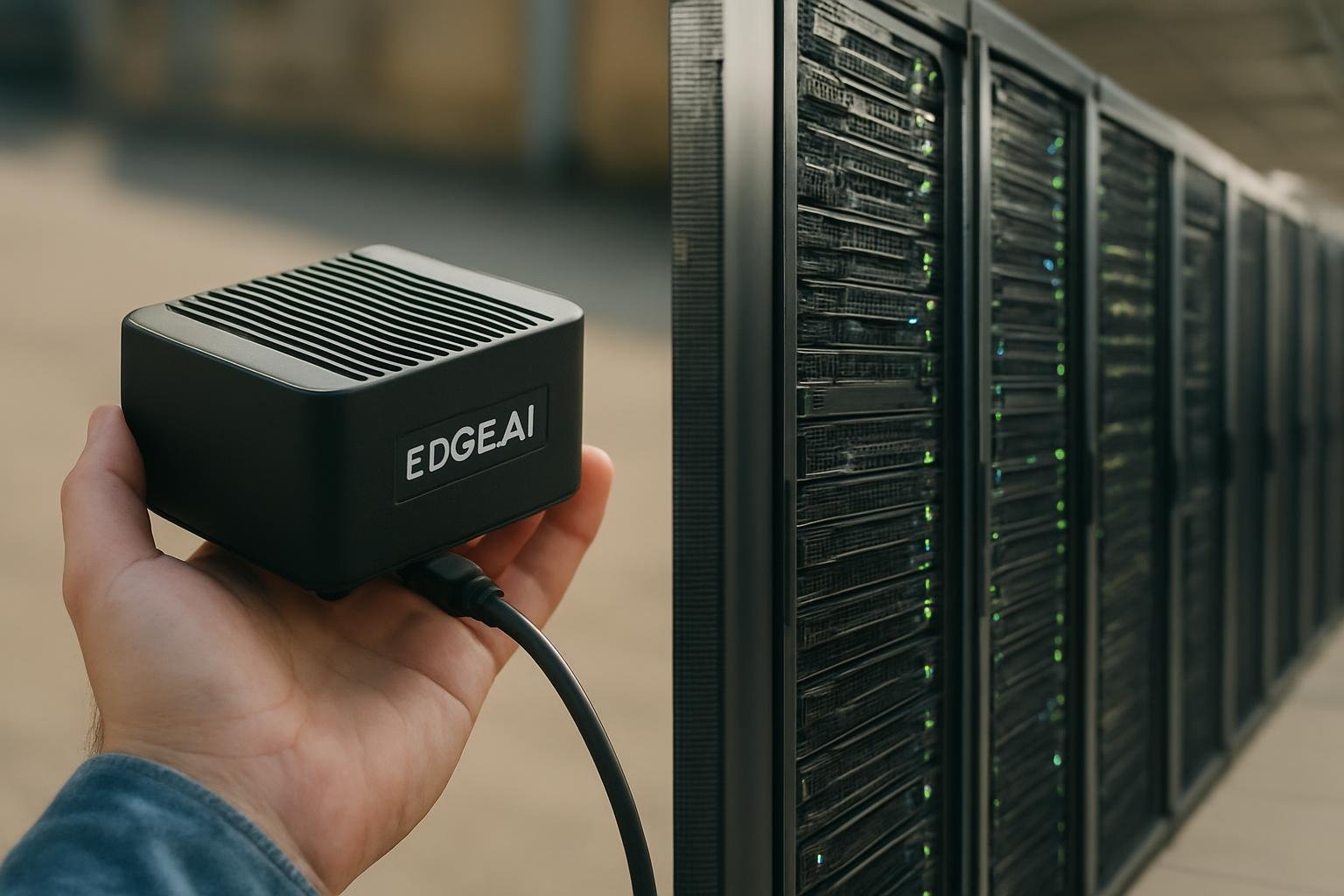
Top 7 Advantages of Using Vittorio Edge AI for On-Device Processing

In today’s fast-paced technology landscape, edge computing has emerged as a transformative approach, especially with artificial intelligence (AI) shifting closer to the devices we use every day. Vittorio Edge AI is at the forefront of this movement, delivering powerful on-device processing capabilities that redefine how data is handled and decisions are made. By bringing AI algorithms directly onto devices, Vittorio Edge AI offers numerous advantages that enhance performance, security, and efficiency across various applications.
Introduction to On-Device Processing
On-device processing refers to running AI models and computations locally on hardware devices, such as smartphones, IoT sensors, and embedded systems, rather than relying solely on cloud-based servers. This approach minimizes the need to send data over networks, thus reducing latency, privacy risks, and dependency on constant internet connectivity. Vittorio Edge AI harnesses cutting-edge hardware and optimized software frameworks to make edge AI not only feasible but highly effective for diverse use cases.

Advantage 1: Reduced Latency
One of the most significant benefits of using Vittorio Edge AI for on-device processing is the dramatic reduction in latency. Because data processing occurs locally, analysis and inference happen in real-time without delays caused by data transmission to cloud servers. For example, in autonomous vehicles or real-time surveillance, immediate responses are critical. Vittorio Edge AI enables these systems to react swiftly to their environments, improving safety and user experience.
Advantage 2: Enhanced Privacy
Data privacy is a growing concern, particularly when dealing with sensitive personal or business information. Vittorio Edge AI addresses this by keeping data on the device, eliminating the need to send user data to the cloud. This significantly reduces exposure to cyber threats and unauthorized access. Applications in healthcare, finance, or smart home devices benefit greatly, as user data is processed securely within the device itself, adhering to stringent privacy regulations.
Advantage 3: Lower Bandwidth Usage
By processing data locally, Vittorio Edge AI reduces the volume of data that needs to be transmitted over networks. This leads to considerable savings on bandwidth, which is particularly beneficial in environments with limited or expensive connectivity, such as remote locations or mobile networks. Reduced data transfer also lessens the load on centralized servers and network infrastructure, enabling more efficient resource management for service providers.
Advantage 4: Real-Time Decision Making
When AI computations are performed directly on the device, decisions are made immediately, allowing for prompt actions based on current data inputs. This is essential for applications like predictive maintenance in industrial machines, real-time fraud detection, or augmented reality experiences. Vittorio Edge AI’s capabilities ensure that AI-driven insights and responses are available without delay, supporting critical tasks that depend on timely decision-making.